We tend to judge others by their behaviour and ourselves by our intent. But behaviour is only the tip of the iceberg. The culture iceberg model is a simple and powerful way to illustrate that what we can see in a person, including ourselves, is only a fraction of what is actually driving them.
The model
The culture iceberg was originally developed as a framework for understanding cultural differences between groups of people: why people from different backgrounds behave so differently even in the same situation. But it applies just as powerfully at the individual level, and that is how I have used it most.
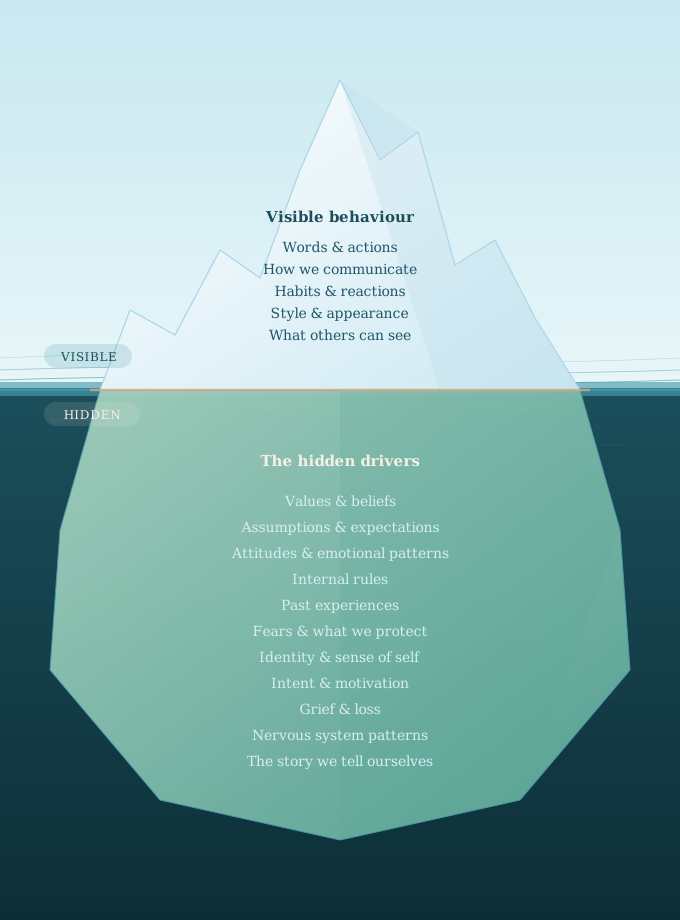
The iceberg has two parts. Above the waterline: the things that are visible. Below the waterline: the things that are not.
Above the waterline: visible behaviour
This is what other people can see. Words, actions, choices, reactions, habits, style, tone. The way someone communicates. Whether they are on time. Whether they push back or go along. The surface of the person as it appears to the world.
This is the part we are almost always judging, in others and in ourselves. We see behaviour and we draw conclusions: this person is rude, this person is unreliable, this person is difficult. Or, turned inward: I behaved badly, I am failing, I am not good enough.
Below the waterline: the invisible drivers
Underneath that visible behaviour is everything that is shaping it, most of which neither the person nor those around them can easily see:
- Values and beliefs: what the person holds as fundamentally true and important
- Assumptions: the unexamined expectations they carry into every situation
- Attitudes: the emotional orientations that colour how they interpret events
- Rules: the internal scripts about how things should and should not work
- Past experiences: the history that shapes what things mean
- Fears: what the person is protecting themselves from, often without knowing it
- Identity: the story of who they are and what they are for
All of this is below the surface, largely invisible, and it is the actual source of the behaviour above. The behaviour is the symptom. The drivers are the cause.
Why this matters in recovery and relationships
Understanding the iceberg model changes how you relate to your own behaviour. When you react badly, when you snap or withdraw or push people away, instead of just judging the behaviour you can ask: what is below the waterline that is driving this? What assumption, fear, or past experience is running the show right now?
It also changes how you relate to other people's behaviour. When someone does something that hurts or confuses you, the iceberg model invites the question: what is below their waterline that I cannot see? That is not an excuse for harmful behaviour. It is a more accurate and more compassionate way of understanding it.
In concussion recovery, where your own behaviour can feel unpredictable even to yourself (the irritability, the emotional reactivity, the withdrawal), the iceberg model is genuinely useful. Some of what is changing below the surface is neurological. Some of it is grief. Some of it is exhaustion. The behaviour is the visible tip of a very large and complex system.
Using it as a self-reflection tool
When you notice a behaviour in yourself that you want to understand better, try working downward through the layers:
- What did I just do or say? (the visible behaviour)
- What was I feeling just before that? (emotion)
- What thought triggered that feeling? (assumption or belief)
- Where does that belief come from? (past experience or identity)
- What was I trying to protect? (the fear underneath)
This is slow work. It is not always comfortable. But it is the difference between managing the symptom and understanding the cause.
I came across the culture iceberg in my twenties, in a professional context, and it started helping me understand something I had always found frustrating: why people who seemed to share the same values or intentions still behaved so differently from one another, and so differently from what I expected.
The answer, of course, was everything below the waterline. Their assumptions, their past experiences, their internal rules about how things should work: all of it invisible to me, all of it shaping every interaction.
Turning it on myself was harder but more useful. When I react in a way that surprises or embarrasses me, the iceberg model gives me a framework for getting curious rather than just critical. What was actually driving that? What below-the-waterline belief just got activated? That question is much more useful than "why did I do that, I am terrible."
In the context of concussion recovery, it also helped me understand my own inconsistency. Some days I was fine. Some days I was not. The behaviour above the waterline looked erratic. But below it, the drivers were pretty consistent: exhaustion, fear, grief, a nervous system with less capacity than usual. Understanding that did not fix anything. But it gave me more compassion for myself, which helped.